
By Chelsea Martens, Senior Compensation Consultant, Wilson Group
Here’s a number that tells two completely different stories: 4%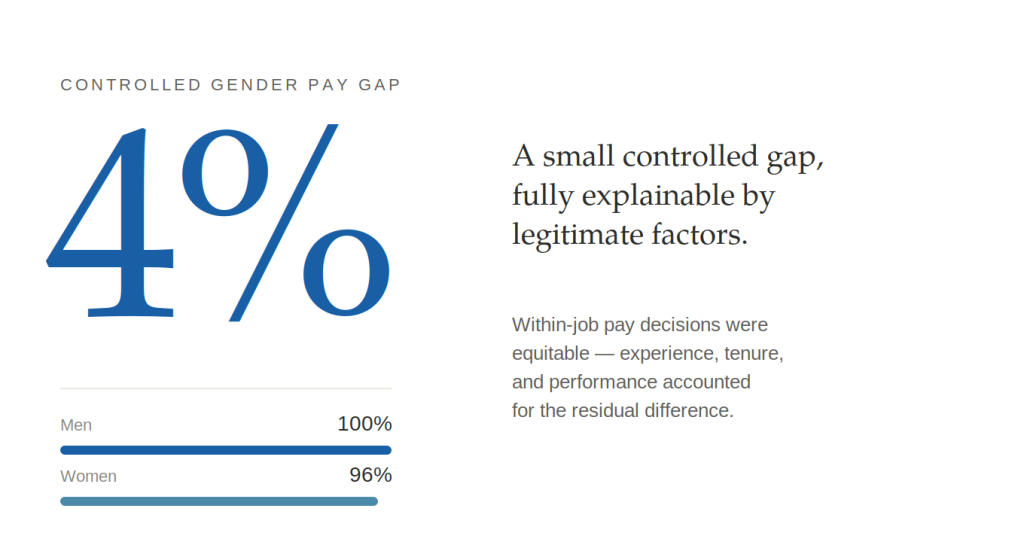
In a recent multi-country pay equity study I personally authored, that was the Controlled Gender Pay Gap — well within the range social science considers acceptable, and entirely explainable by legitimate factors like experience, tenure, and performance. Leadership could confidently say within-job pay decisions were equitable.
But the same dataset, sliced differently, produced Raw Pay Gaps that swung from a 48% gap favoring men in some countries to a 20% gap favoring women in others. And a global view showed women outearning men by 30%.
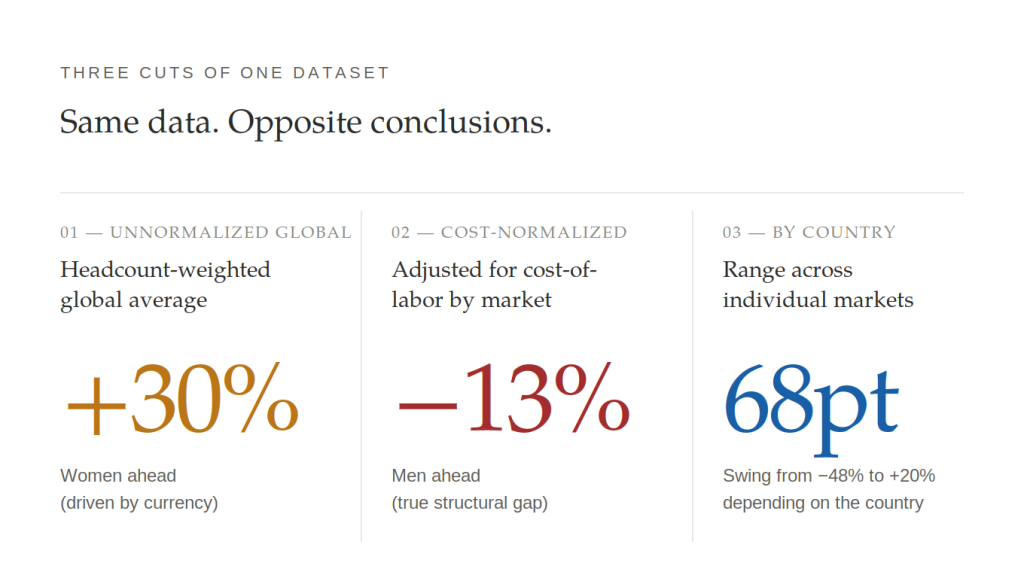
Same company. Same payroll data. Same employees. Four very different conclusions depending on how you measured.
That’s the core problem with reducing pay equity to a single number. And it’s why savvy organizations – whether they’re reporting to regulators, a board, or their own workforce – increasingly look at pay equity through two distinct lenses rather than one.
Why the One-Number Approach Falls Short
Most organizations start with a Raw Pay Gap analysis – a simple comparison of average pay between groups. It’s easy to compute and easy to communicate. But in practice, it’s an incomplete picture, because it can be driven by workforce structure as much as by pay decisions.
A Raw Pay Gap might look significant simply because one group holds more senior roles, works in higher-cost-of-labor markets, or is concentrated in higher-paying job families – not because people are paid unfairly within the same job and level.
This type of analysis answers: “What is the average pay difference between two groups?”
But it does not answer: “Are people being paid equitably for the work they perform?”
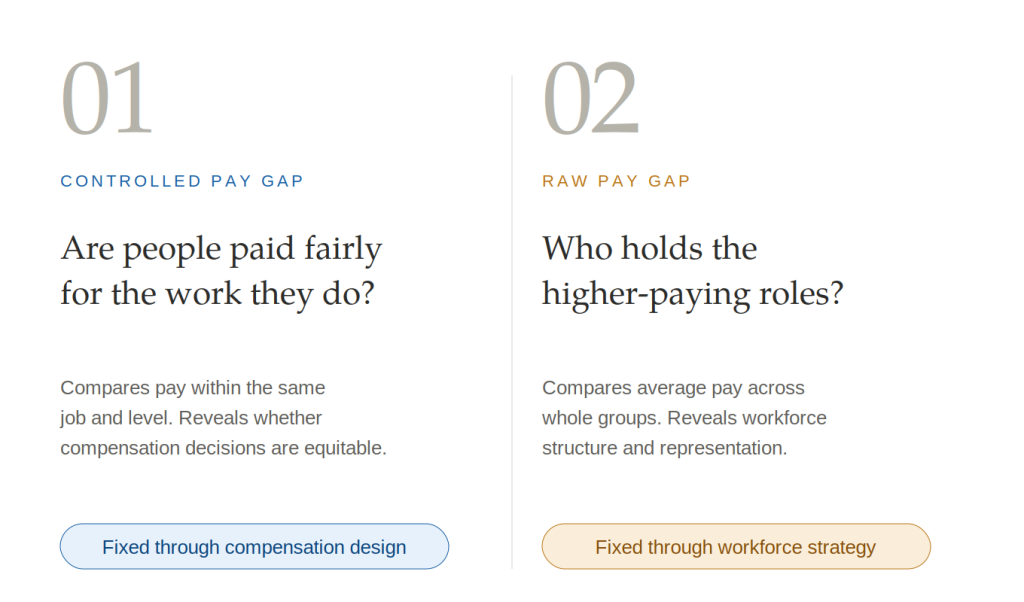
A Better Framework: Controlled vs. Raw Pay Gaps
To meaningfully assess pay equity, organizations need two complementary lenses. Each answer a different question. Each point to a different kind of action. Both matter.